


Here are the historical events in chronological order, along with a brief synopsis for each.
1. The Northridge Earthquake (1994)

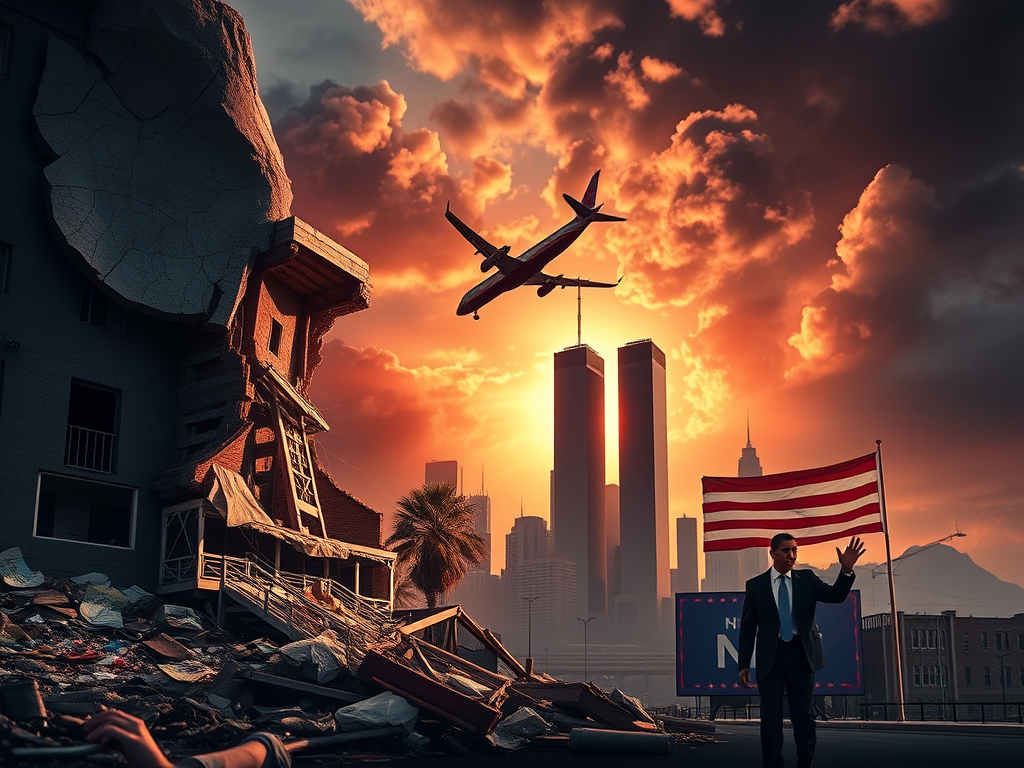
In the early morning of January 17, 1994, a powerful 6.7 magnitude earthquake struck the San Fernando Valley region of Los Angeles, shaking the ground and sending shockwaves across the city. Centered in Northridge, this seismic event unleashed chaos as it caused widespread devastation, collapsing freeways, damaging hospitals, and destroying thousands of buildings, many of which were residential homes. The destruction was not just structural; it shattered lives and communities, resulting in dozens of deaths, thousands of injuries, and billions of dollars in damage, making it one of the costliest natural disasters in U.S. history. First responders and volunteers worked tirelessly in the aftermath, sifting through rubble in search of survivors and providing aid to those who had lost everything, while emergency services scrambled to restore order and rebuild the affected areas, highlighting the resilience of the community in the face of such calamity.
2. Death of Princess Diana (1997)

On August 31, 1997, Diana, Princess of Wales, died from injuries sustained in a high-speed car crash in the Pont de l’Alma tunnel in Paris, France. The crash also killed her companion, Dodi Fayed, and their driver, Henri Paul, who was fleeing paparazzi. Her death prompted an unprecedented global outpouring of grief and intense public and media scrutiny.
3. Death of JFK Jr. (1999)

On July 16, 1999, John F. Kennedy Jr. died in a small plane crash. His wife Carolyn Bessette and her sister Lauren Bessette also died in the crash. The plane he was piloting crashed into the Atlantic Ocean off the coast of Martha’s Vineyard. The son of President John F. Kennedy, his death in the prime of his life added another tragic chapter to the story of the Kennedy family.
4. The 9/11 Attacks (2001)

On September 11, 2001, the United States was struck by a series of coordinated terrorist attacks. Nineteen militants hijacked four airplanes, intentionally crashing two into the World Trade Center towers in New York City and a third into the Pentagon in Virginia. The fourth plane crashed in a field in Pennsylvania after passengers fought back. The attacks killed nearly 3,000 people, triggered the U.S. “War on Terror,” and fundamentally reshaped global politics and security.
5. Barack Obama’s Election (2008)

On November 4, 2008, Senator Barack Obama of Illinois was elected the 44th President of the United States. His victory over Senator John McCain was a landmark moment in American history. He became the first African American to be elected to the nation’s highest office. His campaign, centered on a message of “Hope and Change,” mobilized a new and diverse coalition of voters.
6. Legalization of Gay Marriage (2015)

On June 26, 2015, the U.S. Supreme Court issued a landmark 5-4 decision in the case of Obergefell v. Hodges. This ruling declared that the fundamental right to marry is guaranteed to same-sex couples by the Constitution, legalizing gay marriage in all 50 states. The decision was the culmination of decades of legal and social activism by the LGBTQ+ rights movement.
7. Donald Trump’s Re-Election (2024)

In the U.S. presidential election on November 5, 2024, President Donald Trump defeated the incumbent Vice President, Kamala Harris. This victory made him only the second president in U.S. history to be elected to two non-consecutive terms (after Grover Cleveland). He was inaugurated for his second term on January 20, 2025.
8. The Eaton Fire (2025)

In January 2025, a devastating wildfire occurred, which would later be known as the Eaton Fire. This catastrophic event ignited in the dry, brush-laden areas of the San Gabriel Valley foothills, encompassing not only parts of Pasadena and Altadena but also extending to surrounding communities that were nestled at the foot of the mountains. Severe Santa Ana winds, notorious for their intensity and ability to spread flames rapidly, drove the fire, making it exceptionally destructive and uncontrollable. The rapid advancement of the flames destroyed thousands of homes and structures, leaving families displaced and communities in shock. Among the losses were historic landmarks like the Eliot Arts Magnet Middle School campus on Lake Avenue, a cherished institution that stood as a testament to the area’s rich cultural heritage. The fallout from the fire was profound, leading to significant environmental damage and prompting discussions about fire prevention and climate change. Ultimately, the Eaton Fire stands as one of the most destructive and costly wildfires in California’s history, serving as a stark reminder of nature’s power and the urgent need for comprehensive disaster preparedness.




Leave a Reply