
If you’ve spent any time scrolling through TikTok or Instagram lately, you’ve seen it. The slow-motion walk to the local coffee shop, the moody lighting while working on a laptop, the cinematic music layered over a mundane commute.
It’s called “Main Character Energy,” and on the surface, it looks like harmless confidence. It’s the digital age’s version of “fake it ’til you make it.”
But as I watched yet another video of someone treating a public space like their personal movie set—ignoring the very real, annoyed people around them—I started wondering about the psychological cost of this trend.
We are constantly being told to “romanticize our lives.” But at what point does romanticizing the mundane cross the line into Main Character Syndrome? Are we using this narrative device to reclaim our agency, or are we simply dissociating from reality because the real world feels too chaotic to manage?

The Gamification of Existence
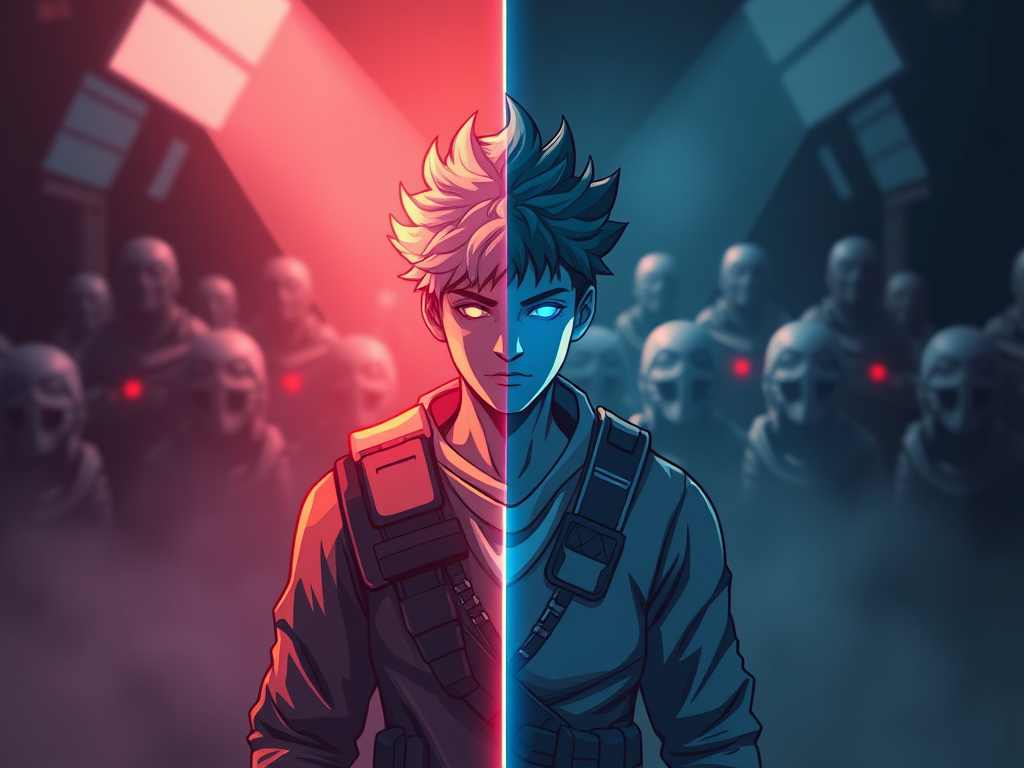
To understand this, we have to look at the language used. The flip side of viewing yourself as the “Main Character” is viewing everyone else as an NPC (Non-Player Character).
In video game terminology, an NPC has no internal life; they exist solely to further the plot of the protagonist. They are background texture.
When we adopt this mindset in real life, we risk slipping into a form of solipsism—the philosophical idea that only one’s own mind is sure to exist. If I am the star of the movie, then you are just an extra. If you cut me off in traffic, you aren’t a stressed person late for work; you are a villain introduced to test my patience.
This is where the psychology gets tricky. Treating others as NPCs strips them of their humanity. It kills empathy. And in a world that is already struggling with disconnection, telling ourselves that we are the only ones with a complex inner life is a dangerous game to play.

The Defense Mechanism: Why We Do It
However, I don’t want to dismiss the trend entirely. As someone who appreciates the darker, more dramatic aesthetics of life (you don’t become a Giallo-loving goth without enjoying a bit of theatrics), I understand the appeal.
Psychologically, “Main Character Energy” can be a form of cognitive reframing.
When we view a difficult situation through a cinematic lens, we detach slightly. A breakup isn’t just a tragedy; it’s the “end of Act Two.” A setback at work isn’t a failure; it’s “character development.”
In therapy, we often talk about the Locus of Control.
- External Locus of Control: Things happen to me (victim mindset).
- Internal Locus of Control: I make things happen (empowerment).
By casting yourself as the protagonist, you are attempting to shift from an external to an internal locus of control. You are writing the script. You are telling yourself that there is a plot, a narrative arc, and a reason for the suffering. In a chaotic, post-pandemic world where things often feel random and cruel, imposing a narrative structure on our lives feels safe. It feels like control.

Dissociation in High Definition
The danger lies in the degree of detachment.
If you are constantly performing your life for an imaginary audience (or a literal digital one), you aren’t actually living it. You are observing it. This is a mild form of dissociation—disconnecting from the present moment to view yourself from the outside.
I catch myself doing it sometimes. I’ll be walking down a street in Pasadena, the sun hitting the jacarandas just right, and instead of feeling the sun, I’m thinking about how the scene would look in a montage. I’ve stepped out of my body and into the director’s chair.
While this can soothe anxiety in the short term, living permanently in the “third person” prevents us from experiencing genuine connection. You can’t hold a deep conversation with a friend if you’re worried about how the lighting hits your cheekbones or if the dialogue fits your personal brand.

The Philosophy of “Sonder”
So, where is the balance? How do we keep the confidence of the Main Character without the narcissism?
I think the antidote is a concept called Sonder.
Sonder is the profound realization that everyone around you—the stranger on the subway, the barista, the person driving slowly in front of you—is living a life as vivid and complex as your own. They are the Main Characters of their own movies. You are just a cameo in theirs.

The Verdict
There is nothing wrong with romanticizing your life. Light the candles, play the dramatic score, wear the outfit that makes you feel powerful. As a witch, I believe in the power of intention and ritual; dressing the part is half the magic.
But remember that a good movie isn’t just about the protagonist staring into a mirror. It’s about interaction, conflict, empathy, and growth.
Be the Main Character of your life, absolutely. Just don’t forget that you’re sharing the screen with 8 billion other leads.
What do you think? Do you find “Main Character Energy” empowering, or is it just a symptom of our digital loneliness? Let me know in the comments.




Leave a Reply