
For centuries, the seekers of hidden knowledge have stood at a crossroads. As we delve into the rich, complex history of the Solomonic tradition and the Western Mystery Tradition, a fundamental dichotomy emerges: the distinction between the Theurgic (Divine/High) and Goetic (Infernal/Low) approaches to magic.
Your recent exploration of the Lesser Key of Solomon and the broader grimoire tradition highlights this tension perfectly. Whether you are studying the Ars Notoria, the Theurgia-Goetia, or the Ars Goetia, you are encountering the two distinct trajectories of occult power: the path of ascension and the path of command.
The Two Pillars of the Tradition
As visualized in the Dual Paths of Occult Power infographic, the practitioner must navigate two primary orientations toward the unseen realm:
| Aspect | Theurgic Path (The High Art) | Goetic Path (The Low Art) |
| Primary Goal | Union with the Divine, Wisdom, Illumination | Mastery of material outcomes, hidden knowledge |
| Methodology | Oratory, supplication, ritual purification | Conjuration, binding, commanding of spirits |
| Archetypal Stance | Humble servant, aspiring initiate | Sovereign commander, master of the circle |
| Key Texts | Ars Notoria, Ars Almadel, Ars Paulina | Ars Goetia, Grimoire of Honorius |
The Path of Ascent (Theurgia)
This path is exemplified by works like the Ars Notoria and the Ars Almadel. Here, the goal is not to compel spirits to perform chores, but to elevate the consciousness of the practitioner. Through rigorous fasting, prayer, and the contemplation of sacred symbols, the magus seeks to align themselves with the divine hierarchy. As noted in the texts, this is the path of the “wise,” where the operator becomes an instrument of divine knowledge, seeking clarity and the light of the superior heavens.
The Path of Mastery (Goetia)
Contrastingly, the Goetic tradition—most famously represented by the Ars Goetia—deals with the “airy spirits” and those bound to the terrestrial spheres. This path treats the universe as a complex legal contract. Through the power of Divine Names, the magus constructs a space of authority—the circle—and demands that spirits provide service, reveal secrets, or manifest objects. As the Lemegeton instructs, this is not a path of humble supplication, but of calculated, disciplined command.
Bridging the Worlds
While these paths are often presented as binary opposites, the most seasoned practitioners understand that they are two sides of the same coin. The Theurgia-Goetia acts as a crucial bridge: it acknowledges the “mixed” nature of the airy spirits, requiring both the humility of the Theurgist and the rigorous authority of the Goetic practitioner to engage successfully.
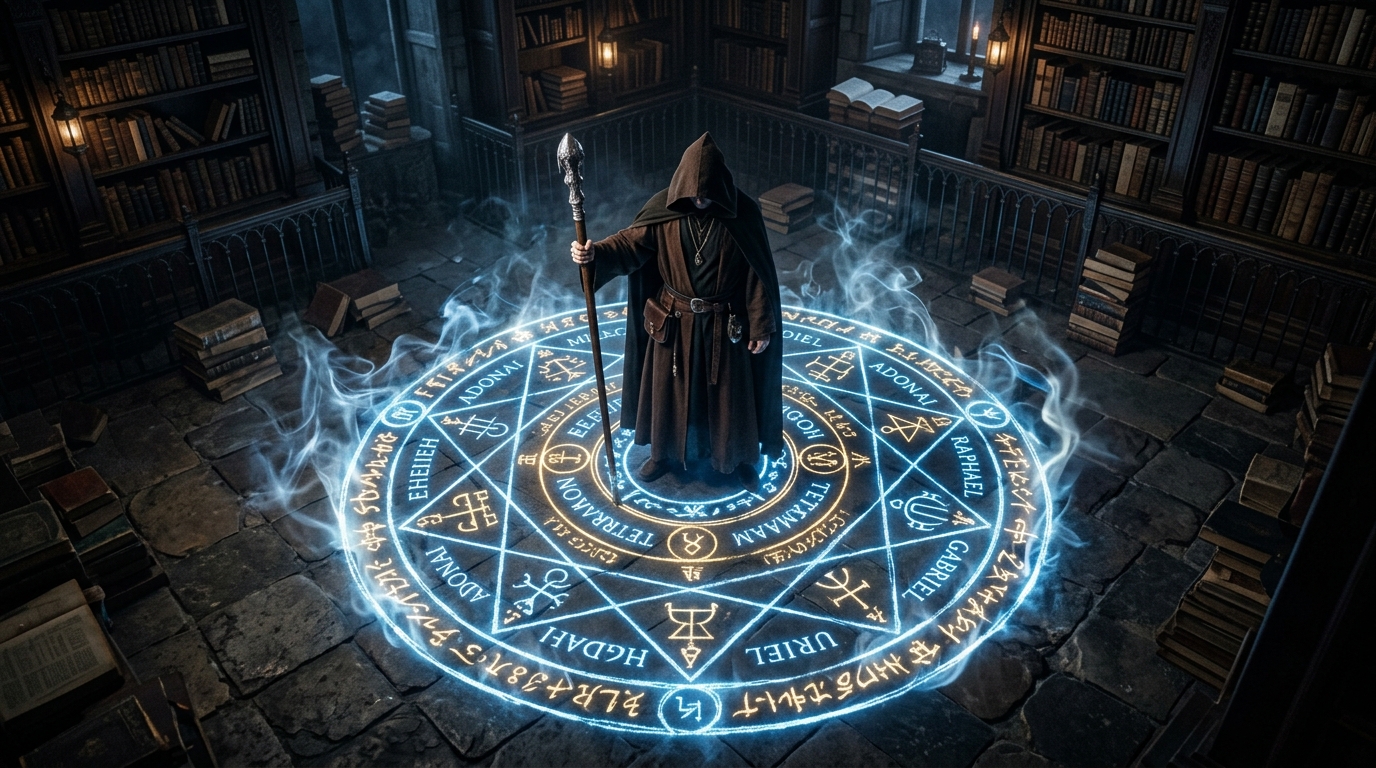
Whether you are seeking the “unveiling of hidden things” or the “knowledge of the higher self,” remember the advice embedded in our shared library: the tools and rituals are merely the external manifestations of an internal transformation. As Agrippa and other masters often reminded their students, the “circle” is not just on the floor—it is in the mind.
Reflection
The history of magic is, in many ways, the history of humanity trying to categorize and interact with the unknown. We have created elaborate bureaucracies for the infernal and grand hierarchies for the celestial.
Which of these paths resonates more with your own studies—are you more drawn to the contemplative, transformative nature of the high arts, or the practical, authoritative application of the lower arts?




Leave a Reply