Halloween Week Special
It’s officially Halloween week, which means fake cobwebs are hanging from porches, pumpkin spice is everywhere, and people are arguing over the best horror movies of all time.

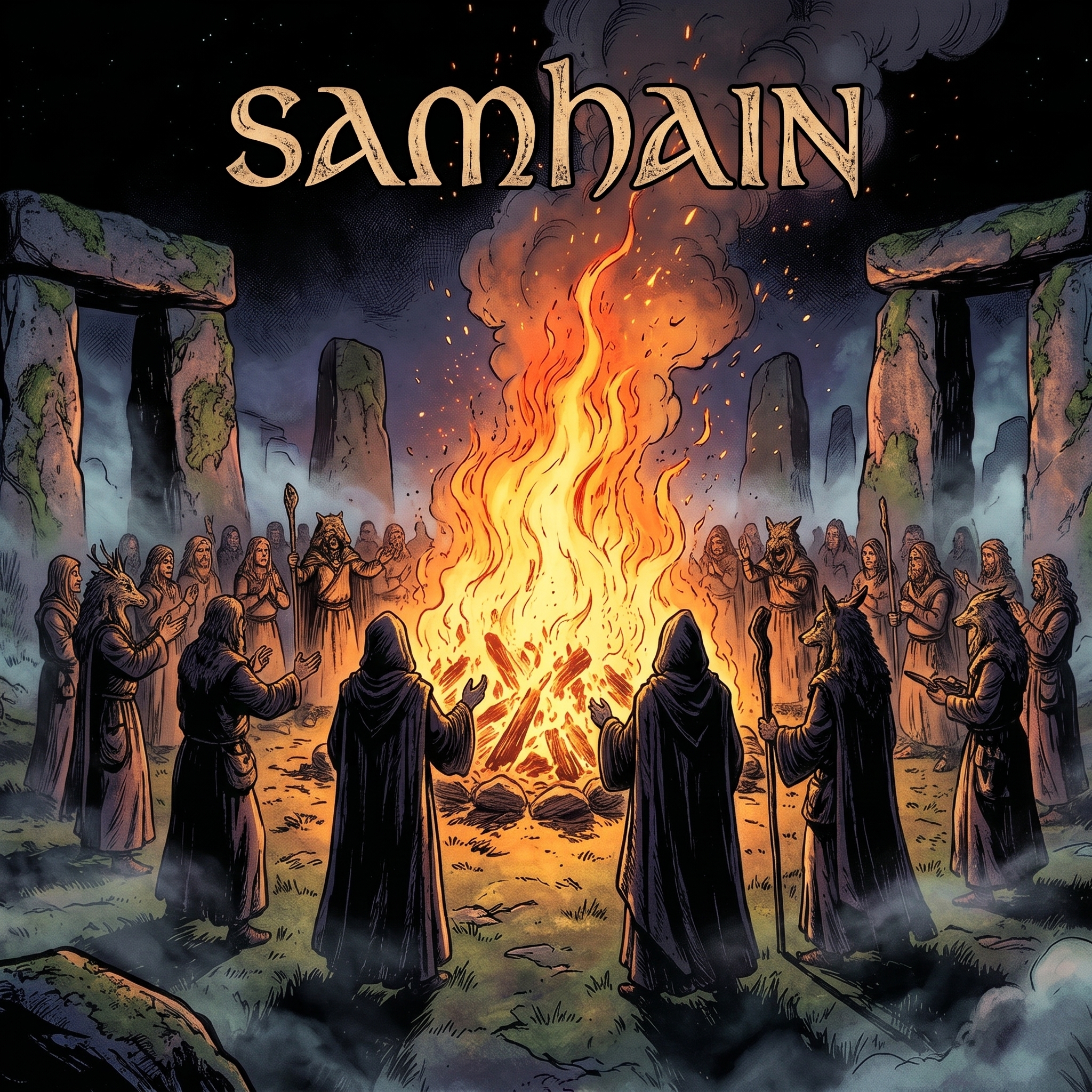
Before we had plastic trick-or-treat buckets, haunted houses, and store-bought costumes, October 31st carried a very different kind of magic and dread. If you trace our modern Halloween traditions back over two thousand years, you end up around a massive communal fire in ancient Ireland, Scotland, and the Isle of Man celebrating Samhain.
Let’s break down the history of Samhain—and see how an ancient pagan fire festival evolved into the night we know today.
1. What Does “Samhain” Actually Mean?
First things first: pronunciation. If you see it written out, your brain might want to say Sam-Hane. But in Gaelic, it’s pronounced “SAH-win” (or “SOW-in”).
The word roughly translates to “summer’s end.” For the ancient Celts, the year wasn’t split into four distinct quarters like our calendar today; it was divided into two halves:
- The Light Half: Spring and summer (growth, abundance, warmth).
- The Dark Half: Autumn and winter (cold, scarcity, darkness).
Samhain marked the pivotal threshold between the two. Celebrated from sundown on October 31st to sundown on November 1st, it was both a harvest festival and the Celtic New Year. Farmers rounded up livestock from summer pastures, stocked storehouses, and prepped to survive the lean winter months ahead.
2. When the Veil Grows Thin

To the Celts, boundary moments were fraught with supernatural power. Twilight was neither day nor night; the shore was neither land nor sea; and Samhain was a liminal hinge between years.
Because it belonged neither to the old year nor the new, time itself stood still.
During this window, the veil separating the physical world from the spiritual realm grew paper-thin. Spirits of ancestors could walk the earth, but so could mischievous or malevolent entities known as the Aos Sí (fairies, spirits, and nature deities).
To navigate the night safely, communities leaned on sacred rituals:
- Sacred Bonfires: Hearth fires in every home were extinguished. Druid priests would kindle a central sacred fire on a hilltop (such as the Hill of Ward in Ireland). Villagers gathered to take embers from this sacred flame to relight their family hearths, symbolizing communal unity and protection through the coming cold.
- Offerings and Feasts: People set extra places at the dinner table or left food and drink on their doorsteps to welcome returning ancestral spirits and appease any wandering, ill-intentioned sprites.
3. How Samhain Turned Into Modern Halloween

So how did an ancient seasonal threshold turn into kids asking for miniature candy bars? The transition happened in stages:
The Christian Layer: All Hallows’ Eve
In the 8th century, Pope Gregory III moved All Saints’ Day (All Hallows) to November 1st, followed by All Souls’ Day on November 2nd. The night before naturally became known as All Hallows’ Eve, which eventually contracted to Halloween. Instead of erasing ancient pagan customs, the church layered new meanings over existing festivities.
Guising & Mumming → Costumes & Trick-or-Treating
During Samhain, people disguised themselves in animal hides and masks so wandering spirits wouldn’t recognize them. By the Middle Ages, this evolved into mumming or guising—traveling door-to-door in costume, singing or performing in exchange for soul cakes and cider.
Turnips → Jack-o’-Lanterns
Centuries before orange pumpkins lined American porches, people in Ireland and the Scottish Highlands carved grotesque faces into turnips, rutabagas, and beets. They placed glowing coals inside to ward off spirits like “Stingy Jack.” When Irish and Scottish immigrants arrived in North America in the 19th century, they discovered pumpkins were much softer and easier to carve.
The Takeaway
When you light a candle inside a pumpkin, pull on a costume, or walk into the crisp autumn night this week, you’re not just participating in a commercial holiday—you’re echoing a 2,000-year-old ritual of marking time, honoring the dark half of the year, and laughing in the face of what lurks in the shadows.
Happy Halloween from Nicole Explains It All!




Leave a Reply