
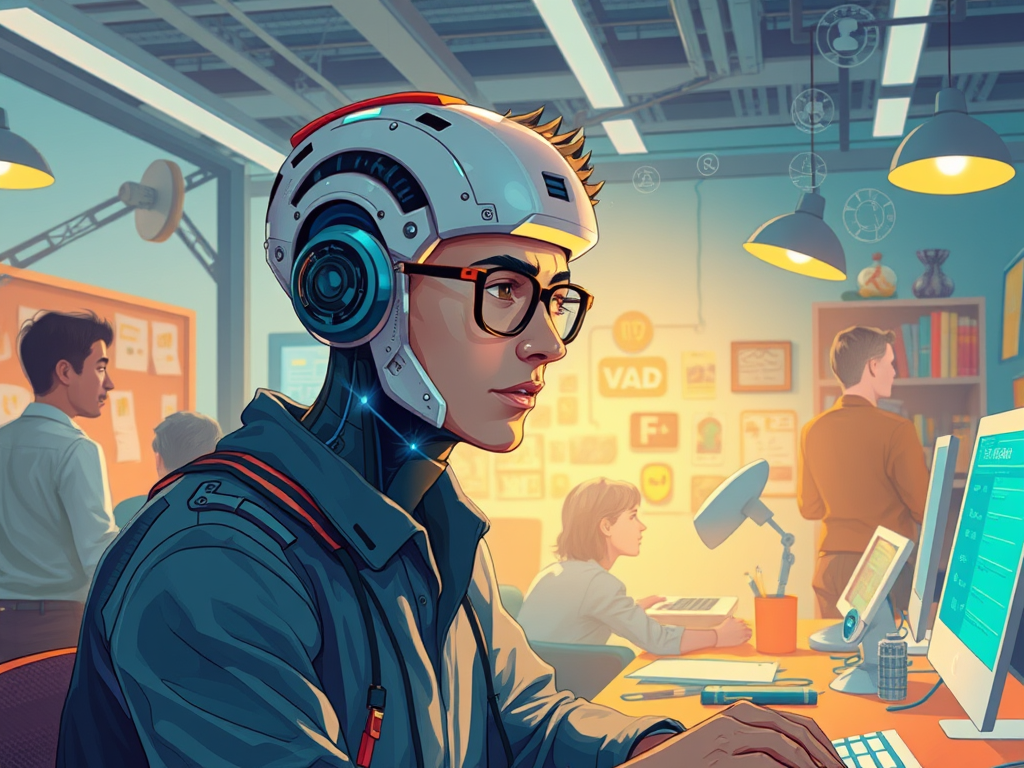
The conversation around artificial intelligence in creative fields often sounds like a doomsday prophecy. We hear about AI replacing artists, writers, and designers, but this narrative misses the most exciting part of the story. AI is not a competitor; it’s a powerful new tool, a collaborator that can unlock new levels of human creativity and free us from the mundane.
If you’ve ever stared at a blank page or an empty canvas, feeling that familiar sense of creative block, you already know the real enemy isn’t a machine—it’s stagnation. AI is our most promising weapon against it. Here’s how you can use it to enhance your creative process.
1. The Ultimate Brainstorming Partner
AI models are trained on vast datasets of information, making them unparalleled at generating ideas. This isn’t about asking an AI to write your story from start to finish; it’s about using it to spark your own imagination.
- For Writers: Facing writer’s block? Ask an AI to generate a list of 50 plot twists for a mystery novel or to create detailed backstories for a new character. You’ll likely discard most of the suggestions, but that one unexpected idea could be the key to unlocking your next chapter.
- For Artists and Designers: Use a text-to-image generator like Midjourney or DALL-E to quickly create visual mood boards. A simple prompt like “futuristic city at night with neon signs in the style of Blade Runner” can instantly give you hundreds of visual concepts to work from, saving you hours of searching for reference images.
2. Rapid Prototyping and Exploration
In the past, exploring new styles or concepts was time-consuming. You had to physically sketch, paint, or build. AI allows for instant, low-stakes experimentation.
- For Visual Artists: Want to see what your painting would look like in a different color palette or a cubist style? AI can render a new version in seconds. This allows you to explore endless possibilities without committing a single brushstroke.
- For Musicians: AI music generators can help you prototype musical ideas. You can feed a melody into a tool like AIVA and get back variations with different harmonies, instruments, or tempos, helping you explore a range of sonic directions that would have taken days to compose manually.
3. Freeing Your Time for True Creativity
One of the most valuable things AI does is handle the grunt work. The repetitive, technical, and often tedious tasks that drain your energy can now be automated, freeing you up to focus on the high-level, uniquely human aspects of creation.
- For Photographers and Video Editors: AI tools in software like Adobe Sensei can automatically color-correct photos, remove backgrounds, or even edit a basic video cut, allowing the creator to focus on the artistic direction and storytelling, not the technical slog.
- For Writers and Editors: Tools like Grammarly and Jasper AI can check your grammar, refine your sentences, and even generate a basic first draft of a blog post based on a few bullet points. This lets you spend your time on what really matters: crafting a compelling narrative, developing your unique voice, and perfecting the emotional core of your work.
The Human Touch Remains Essential
The magic happens when human intention meets artificial intelligence. An AI can generate a thousand images, but it takes a human eye to recognize the one with soul. An AI can draft a thousand words, but it takes a human heart to give them meaning.
The most successful creators in the AI era won’t be the ones who let the machine do all the work. They will be the “centaurs”—the creative who knows how to seamlessly integrate AI into their process, using it to push boundaries, overcome limitations, and focus on the very human skills that AI can never replicate: empathy, lived experience, and the strategic vision to tell a story that truly resonates. The blank page is no longer a source of dread; it’s an invitation to a creative partnership.




Leave a Reply