
You’ve probably seen his work everywhere—the Campbell’s soup cans, the vibrant portraits of Marilyn Monroe and Elvis, the iconic banana on the Velvet Underground album cover. His name is synonymous with pop art, but who was the man behind the wigs, the camera, and the endless stream of silkscreen prints?
Let’s cut to the chase: Andy Warhol was a revolutionary. He wasn’t just an artist; he was a mirror held up to the absurdities of American culture. Born Andrew Warhola in Pittsburgh in 1928, he was a sickly child who found solace in drawing and photography. This early fascination with mass media and celebrity would become the fuel for his entire career.
After moving to New York in the 1950s, he quickly became a successful commercial illustrator, but he was hungry for more. He wanted to blur the line between “high art” and “low art.” He saw beauty not just in masterpieces hanging in museums, but in the everyday objects that populated our lives: a bottle of Coca-Cola, a box of Brillo pads, a tabloid photograph of a starlet.
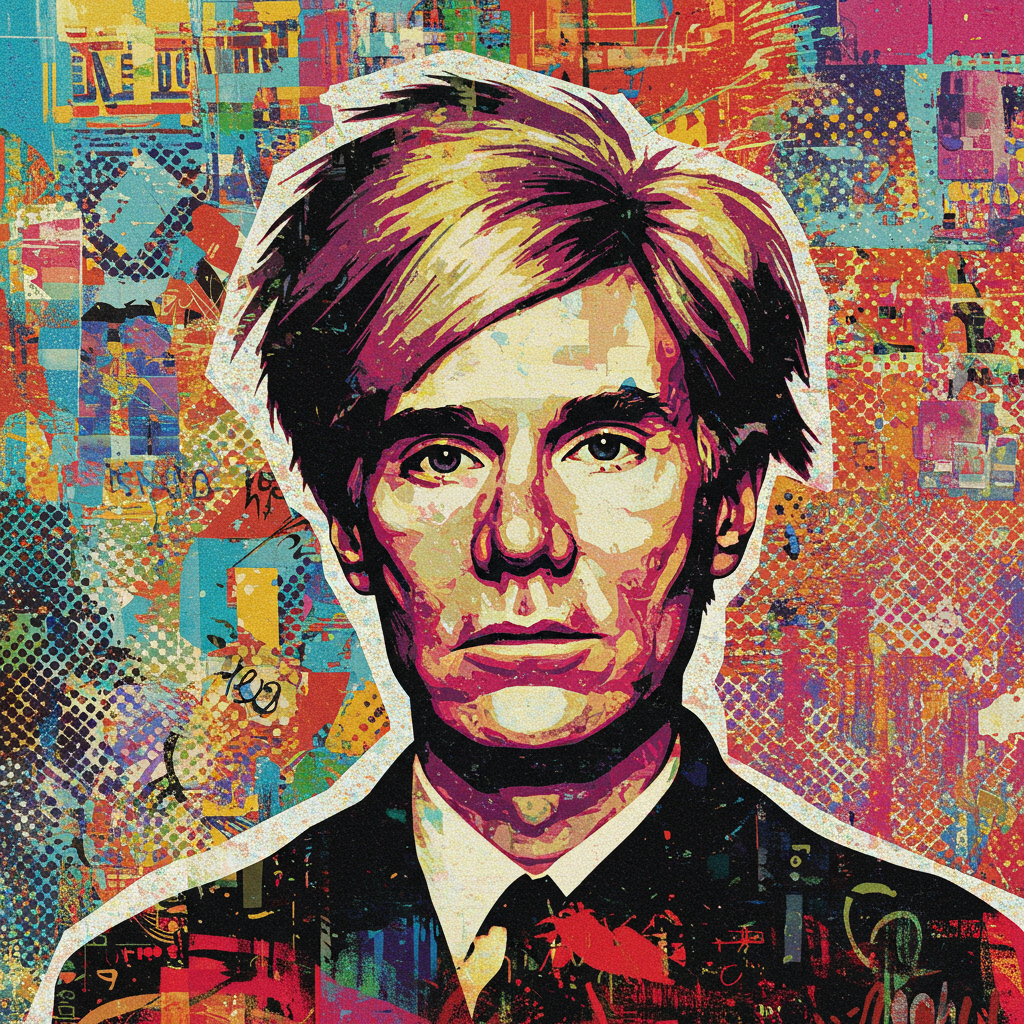
In the 1960s, Warhol burst onto the art scene with his groundbreaking Pop Art. He used techniques like silkscreen printing to replicate images, often in endless repetition. This wasn’t about the artist’s unique hand; it was about the power of mass production. He was saying, “Look at this thing you see every day. Do you really see it? Now, look at it again, and again, and again. Does it mean more, or less?”
His studio, “The Factory,” became a legendary hub of creativity and chaos. It was a place where artists, musicians, drag queens, and socialites rubbed shoulders. It was a reflection of Warhol’s own fascination with fame, celebrity, and the very concept of being “famous for being famous.” He was a master of self-promotion, a quiet observer who often let others do the talking, all while he documented everything with his Polaroid camera.
Warhol’s art was often controversial. Critics called it shallow, commercial, and devoid of emotion. But perhaps that was the point. He was capturing a society obsessed with surfaces, with consumerism, and with fleeting moments of celebrity. He showed us ourselves, and sometimes we didn’t like what we saw.
So, who the F is Andy Warhol? He’s the guy who made art out of a can of soup. He’s the genius who saw the beauty in repetition. He’s the provocateur who held a funhouse mirror up to American culture and made us question what is art, what is fame, and what it means to be alive in a world saturated with images.
He may be gone, but his influence is everywhere. From contemporary art to fashion, from music to advertising, the ghost of Andy Warhol lingers, reminding us that sometimes, the most profound art is found in the most unexpected places.
- Who he was: Andrew Warhola, born in Pittsburgh in 1928. Started out a sickly kid who loved drawing and photos.
- His big idea: He wanted to mess with the idea of “high art” versus “low art.” He saw beauty in everyday stuff like soup cans and Coke bottles, not just fancy paintings.
- Pop Art King: In the 60s, he blew up with Pop Art. He used silkscreen printing to crank out images, repeating them over and over. It was all about mass production, not the artist’s unique touch. He basically made you look at everyday stuff until you really saw it.
- The Factory: His studio was legendary! It was a wild mix of artists, musicians, drag queens, and socialites. He was obsessed with fame and being famous. He just observed everything with his Polaroid.
- Controversial guy: People called his art shallow and too commercial. But maybe that was the point? He was showing us how obsessed we were with surface-level stuff, consumerism, and fleeting fame.
- Bottom line: He made art out of a soup can! He saw the genius in repetition. He was a provocateur who held a funhouse mirror up to American culture, making us question art, fame, and life in a world full of images.
- His legacy: He’s gone, but his influence is everywhere, from art to fashion to music. He reminds us that profound art can pop up in the most unexpected places
My academic deep dive into Andy Warhol began in 2002, during two unforgettable semesters at Woodbury University in Burbank. The opportunity to intensely study his work was a privilege that has informed my creative perspective ever since.




Leave a Reply