Happy spooky season, everyone. It’s the time of year when we all love to settle in and watch something that makes our hearts pound. But as an occult enthusiast, I watch horror movies a little differently. I’m not just here for the jump scare; I’m here for the system.
Think about it. Why are so many of our most iconic horror films completely obsessed with magic, grimoires, and occult rituals?
It’s not just a lazy plot device. It’s because, deep down, these magical “tropes” tap into our most sophisticated spiritual fears. They give a framework to the nameless dread we all feel about the unknown. They suggest that the universe is governed by rules we don’t understand, and that breaking them—even by accident—has consequences.
The jump scare makes you flinch, but the occult trope? That’s what haunts you when you try to sleep.
Let’s look at three of my favorite films and the very real magical traditions they use to terrify us.

1. The Evil Dead: Fear of the Forbidden Book
The Trope: The Grimoire (a book of magic). The Fear: Accidental transgression.
In The Evil Dead, a group of kids finds the Naturom Demonto (or Necronomicon Ex-Mortis, the “Book of the Dead”) in a cabin basement. It’s bound in human flesh and inked in blood. What do they do? They read the incantations aloud.

This is a classic, powerful trope. The grimoire in horror is rarely a tool for enlightenment; it’s a “key” to a “door” that was locked for a very, very good reason.

The magic here is simple and terrifying: words have power. The horror isn’t just the “Deadites”; it’s the catastrophic, irreversible consequence of reading a sentence. It taps into a primal fear that’s been with us since Adam and Eve: the terror of forbidden knowledge. It’s the ultimate “I messed around and found out.” The magic here is a landmine, and the protagonists stumbled right onto it.

2. The Exorcist: Fear of the Unlocked Door
The Trope: The Rules of Possession. The Fear: Loss of bodily autonomy.
What makes The Exorcist so terrifying isn’t just the pea soup and the spinning head. It’s the film’s cold, procedural, and almost legalistic approach to possession. This isn’t random chaos; it’s a spiritual hostile takeover with rules.

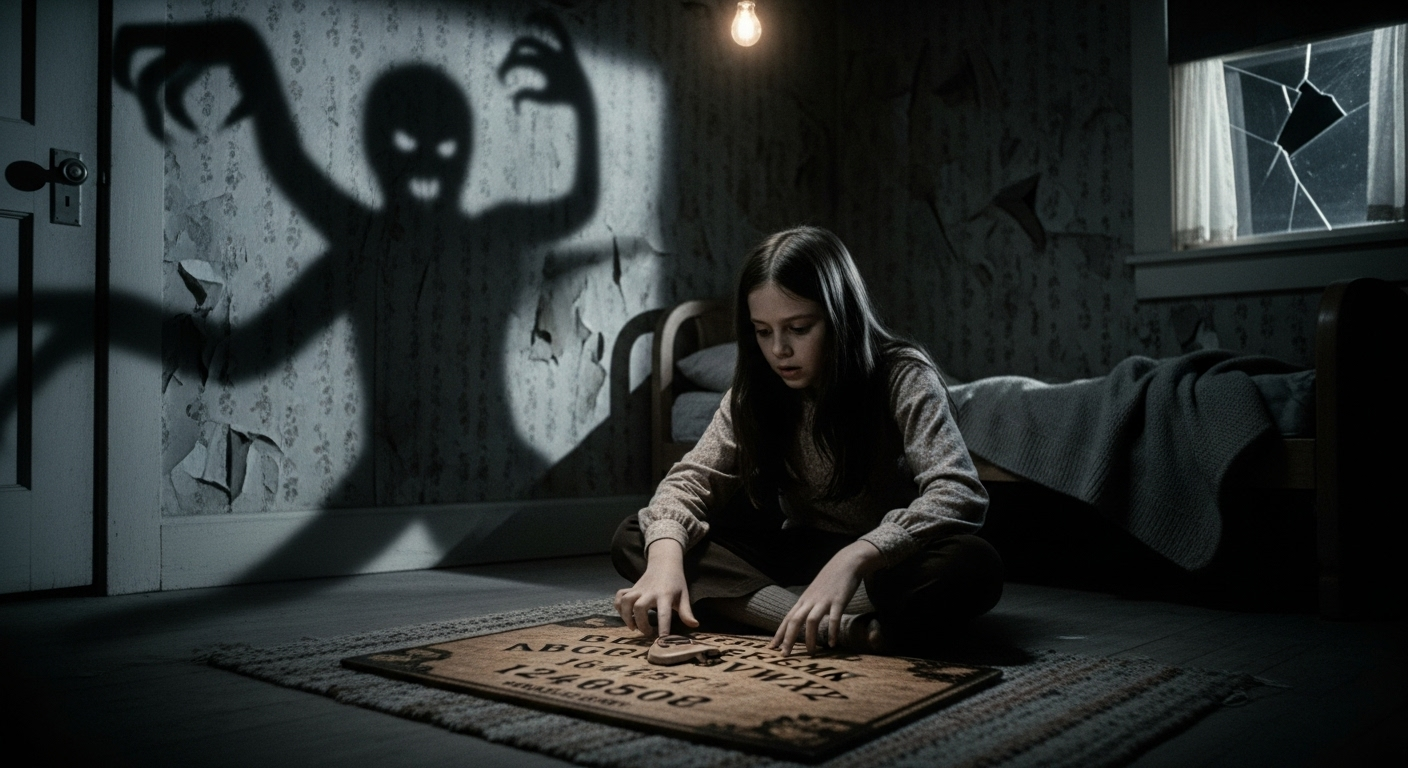
First, there’s the invitation. The demon Pazuzu doesn’t just show up. Regan opens the door by playing with a Ouija board. She essentially put out a spiritual welcome mat, and something monstrous wiped its feet and walked in.
Second, there’s the process. The film treats possession like a siege. The demon slowly takes territory—Regan’s voice, her body, her will. The horror is in watching her agency dissolve.

Finally, there’s the remedy. The priests can’t just pray; they must follow the specific, ancient, and dangerous Rite of Exorcism. They are spiritual lawyers arguing a case, following the letter of occult law to evict an entity that now claims squatter’s rights on a 12-year-old’s soul. It’s the ultimate fear of spiritual home invasion—the horror of being a prisoner in your own body.

3. Hereditary: Fear of the Rigged Game
The Trope: Ceremonial Magic & Summoning. The Fear: Powerlessness and fatalism.
This, to me, is one of the most brilliant and terrifying depictions of real occultism in modern film. Hereditary is not about accidental magic like The Evil Dead. It is about intentional, generational, ceremonial magic.

The Graham family members aren’t the main characters. They are the ingredients.
From the first frame, a cult dedicated to the demon King Paimon (a real entity from the 17th-century grimoire The Lesser Key of Solomon) is casting a complex, multi-decade spell.

All the “magical tropes” are there, but they’re hidden in plain sight:
- The Grimoire: The grandmother’s magic books are real and provide the instructions.
- The Sigil: Paimon’s sigil is everywhere—on the walls, on the pendants, on the telephone pole. It’s a magical seal marking the ritual space.
- The Incantations: The seance (“Liftoach Pandemonium”) isn’t a plea; it’s an invocation, a command to “open the chaos.”
- The Offering: The ritual requires specific sacrifices to break the subjects’ wills and prepare the new “host.”

The horror of Hereditary is the slow-dawning realization that there is no escape. The characters have no free will. Their entire lives, their “accidents,” their grief, and their mental breakdowns were all meticulously plotted steps in someone else’s ritual.
This is the fear of fatalism—the chilling idea that your life is not your own, but just the final page in a dark, magical contract written long before you were ever born.
So, the next time you’re watching a horror movie, look past the monster in the closet. Look for the magic system. Look for the rules. That’s where the real horror is, and it’s what connects these films to traditions that are very, very real.
Sleep tight, Nicole




Leave a Reply